Cross-Chain Arbitrage: The Next Frontier of MEV in Decentralized Finance
The blockchain ecosystem is inherently multi-chain. Layer-1 (L1) networks such as Ethereum supply security and decentralization, while a growing number of Layer-2s (L2s) deliver cheaper, higher-throughput execution. Nearly every chain now hosts its own Decentralized Finance (DeFi) markets, collectively processing several billion USD in daily trading volume [18]. This market fragmentation, however, means prices often diverge across chains. Restoring parity—and thus market efficiency—relies on arbitrage, a major form of Maximal Extractable Value (MEV) [19] in which traders buy low on one market and sell high on another.
Today, most price gaps are closed by arbitraging on-chain Decentralized Exchanges (DEXes) against off-chain Centralized Exchanges (CEXes) [37], whose deep liquidity, low fees, and fast execution—advantages afforded by their centralized infrastructure—make them the primary venue for price discovery. As blockchain execution improves, DeFi adoption grows, and long-tail tokens (which can be issued permissionlessly on-chain) remain unavailable on CEXes, trading volume is expected to shift to DEXes—a long standing goal of the DeFi industry. In that on-chain future, cross-chain DEX-to-DEX arbitrage will be the canonical mechanism for price alignment.
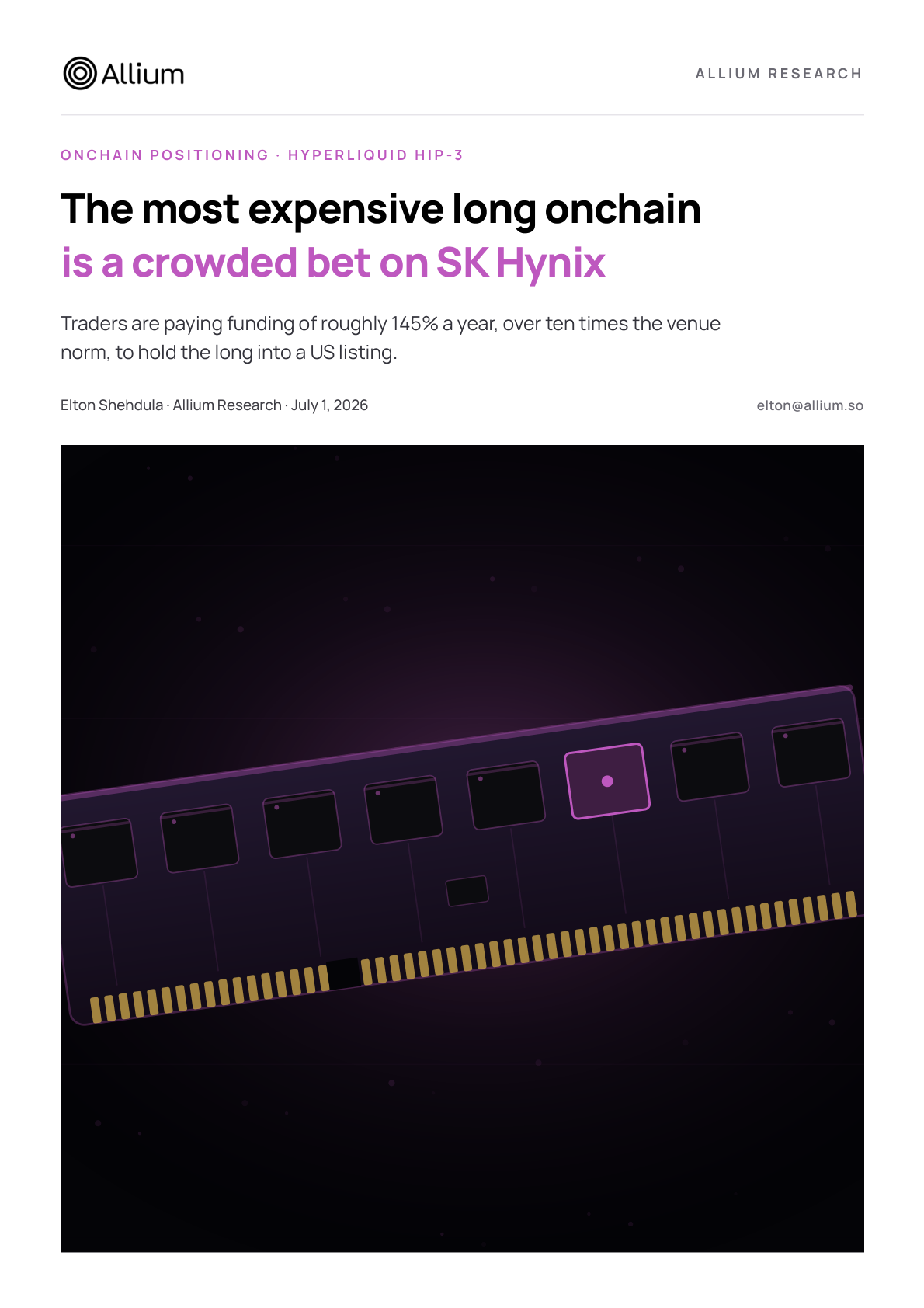
The most expensive long onchain is a crowded bet on SK Hynix
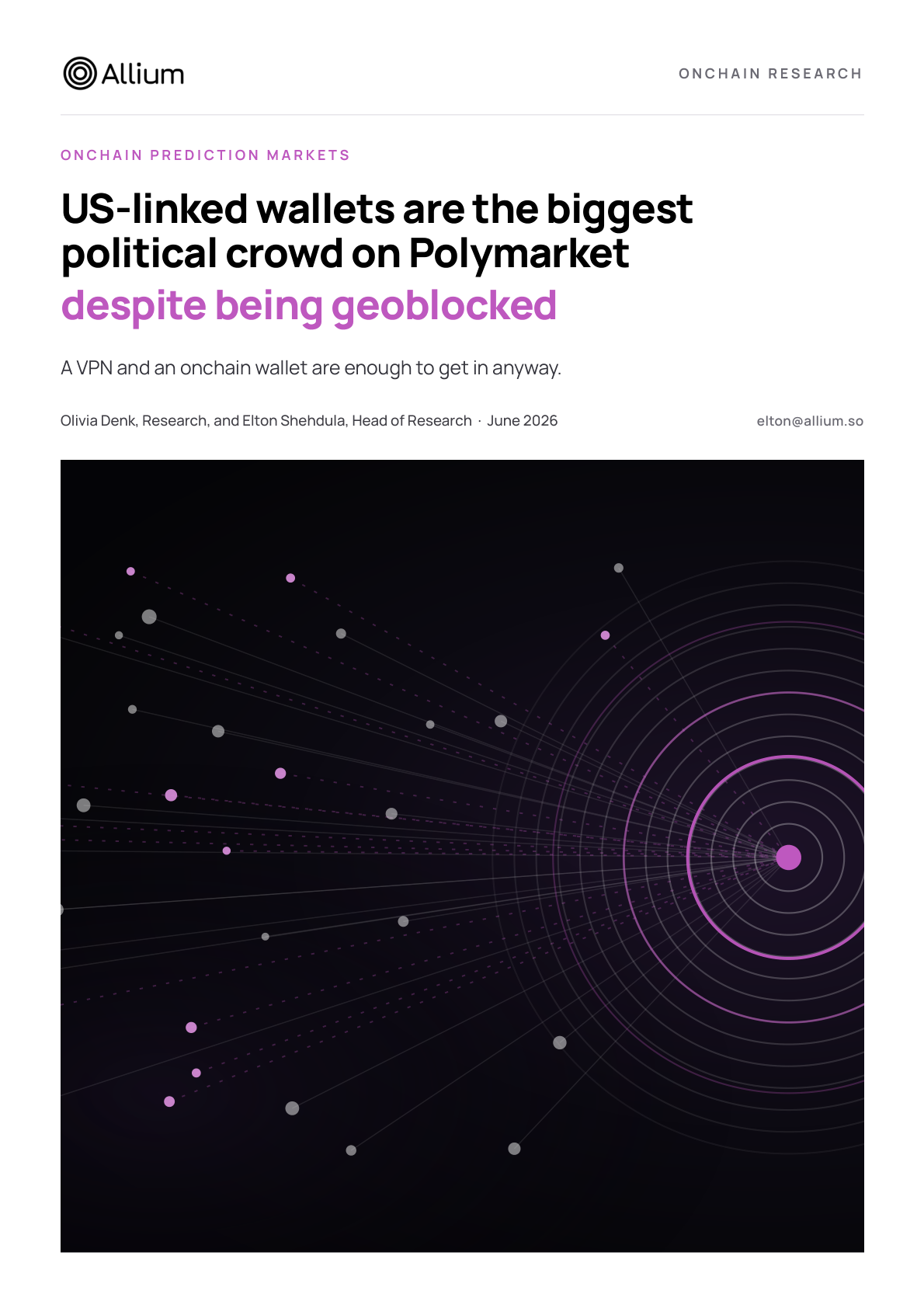
US-linked wallets are the biggest political crowd on Polymarket despite being geoblocked

Which Company Will Be the World's Largest by Year-End 2026?
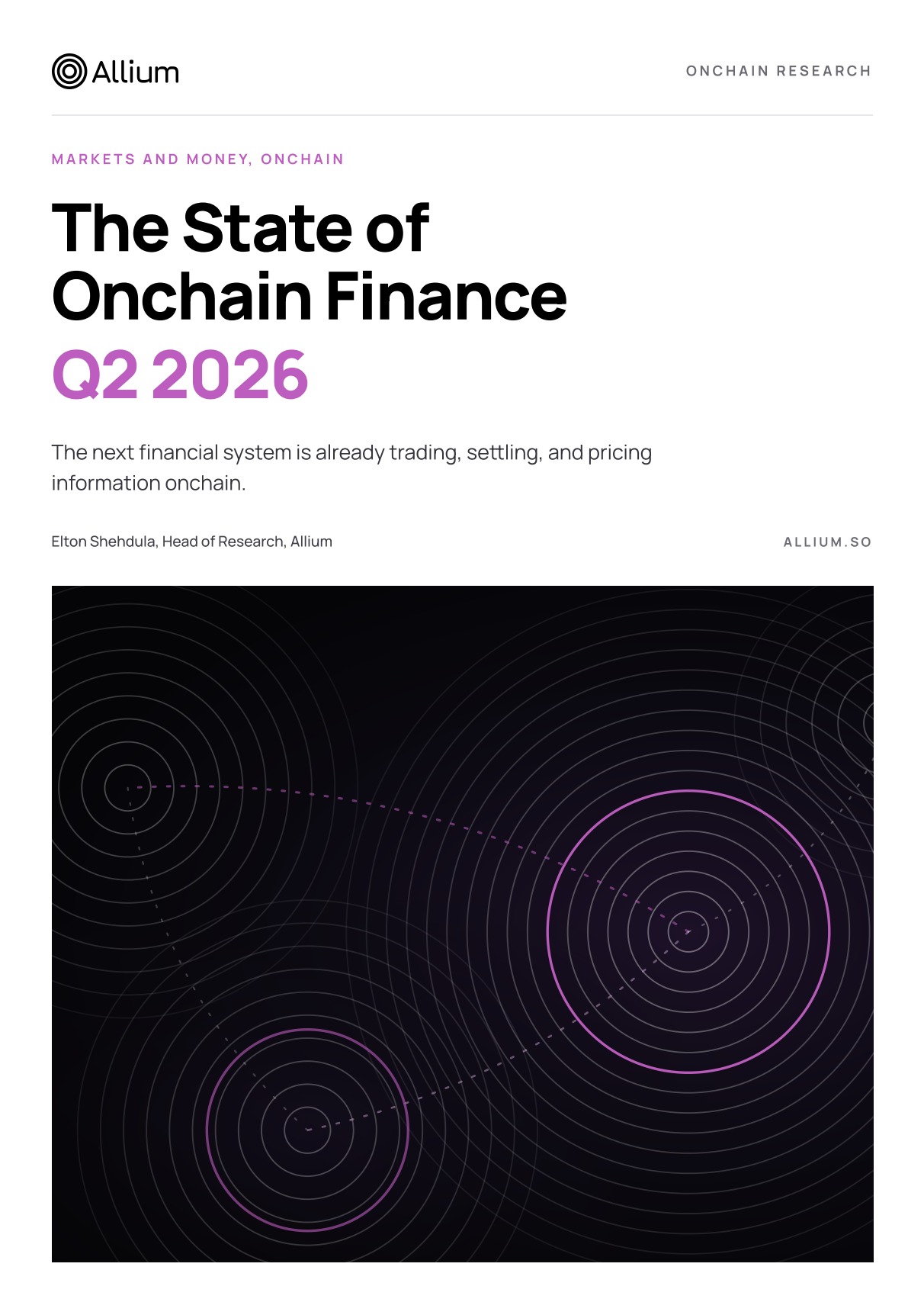
State of Onchain Finance Q2 ’26

Meeting in the Middle
Pricing SpaceX Pre-IPO Onchain
.webp)
World Cup Prediction Markets Geography
A Four-Year Bug, a 64% Crash, and a Question Nobody Can Close
Tokenized US Funds Onchain: $14.2B and Compounding
Tokenized Equities Onchain: $3.3B and Growing
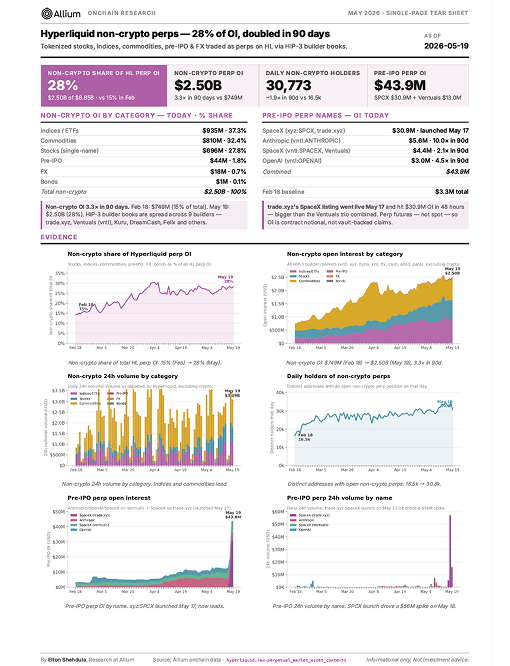
Hyperliquid non-crypto perps
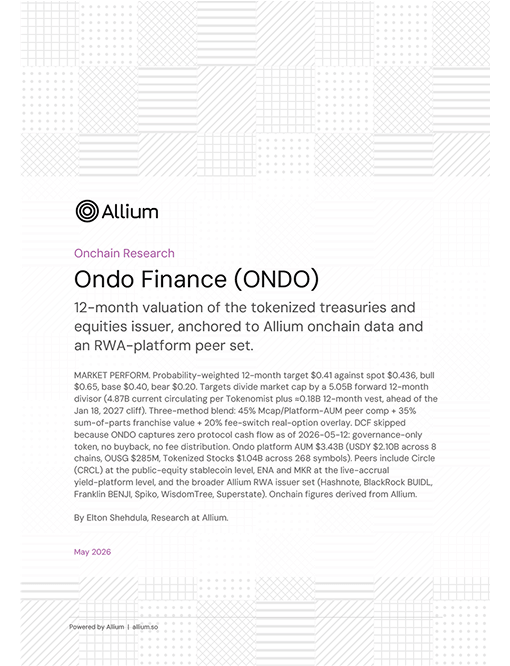
Ondo Finance (ONDO)
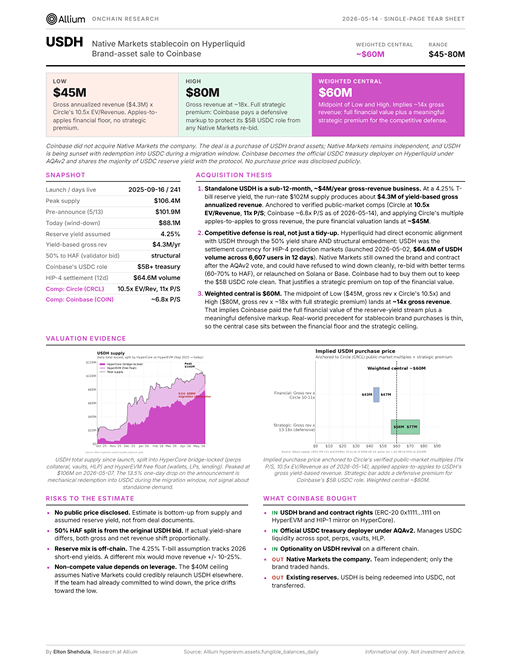
USDH: What Coinbase Actually Bought
When Wall Street Sleeps
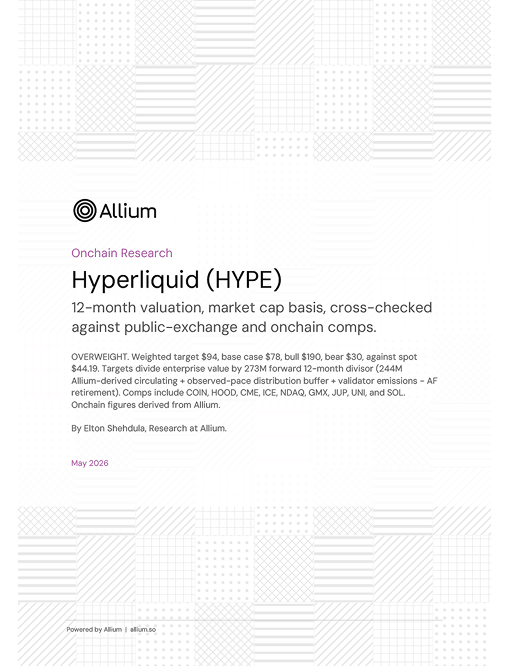
Hyperliquid (HYPE): Onchain Research
Franklin Templeton on Stellar: Onchain Analysis
Prediction Markets: A New Financial Primitive
Stellar: Institutional Infrastructure for Global Settlement and Tokenized Assets
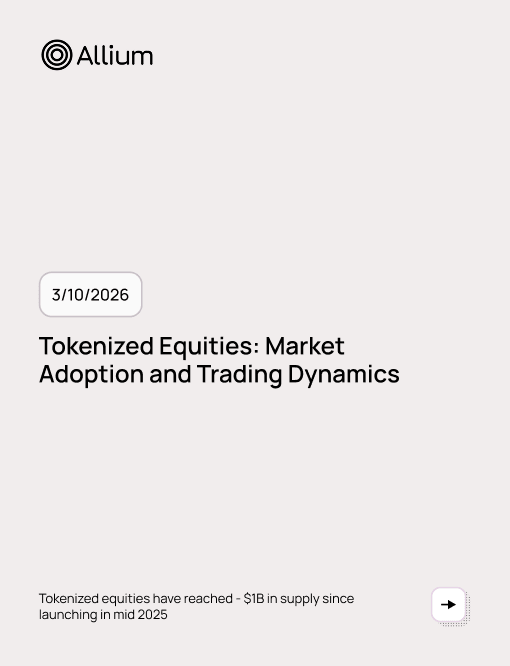
Tokenized Equities: Market Adoption and Trading Dynamics
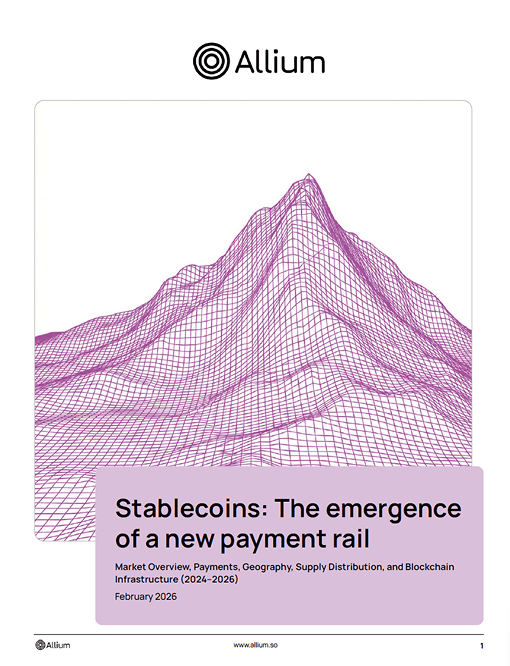
Stablecoins: The emergence of a new payment rail
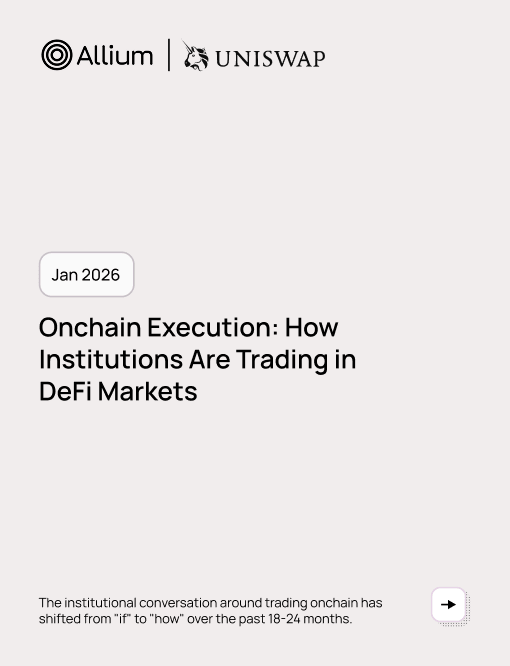
Onchain Execution: How Institutions Are Trading in DeFi Markets
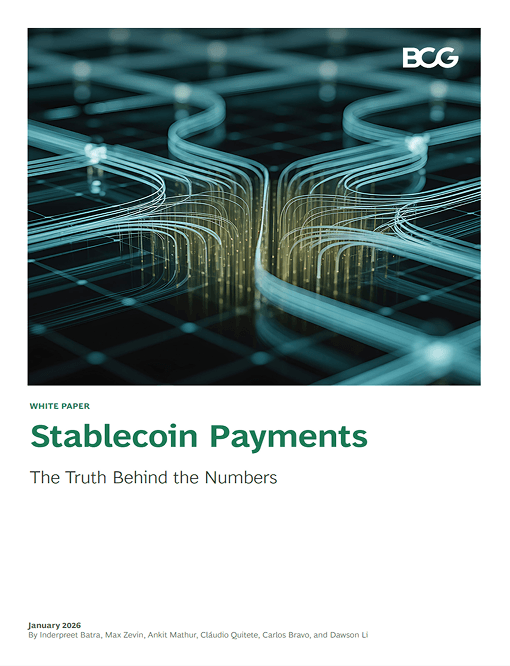
Stablecoin Payments: The Truth Behind the Numbers

In the Shadow of Bank Runs: Lessons from the Silicon Valley Bank Failure and Its Impact on Stablecoins
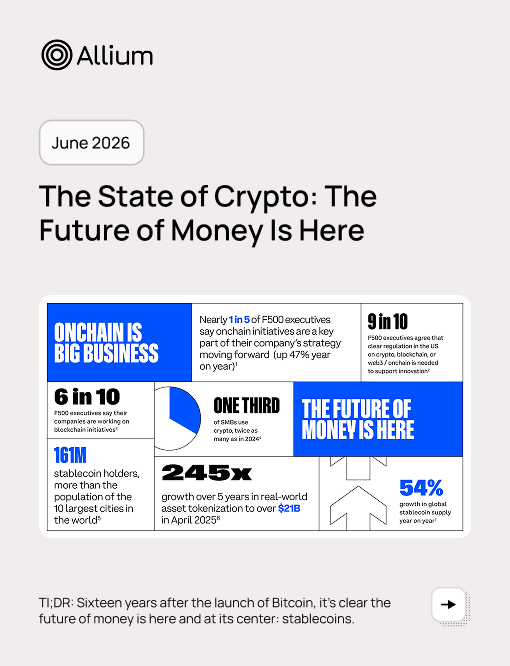
The State of Crypto: The Future of Money Is Here
Stablecoins: Five killer tests to gauge their potential
On-Chain Trading Data Gaps: Risks for Crypto Market Oversight
On-Chain Analysis of Smart Contract Dependency Risks on Ethereum
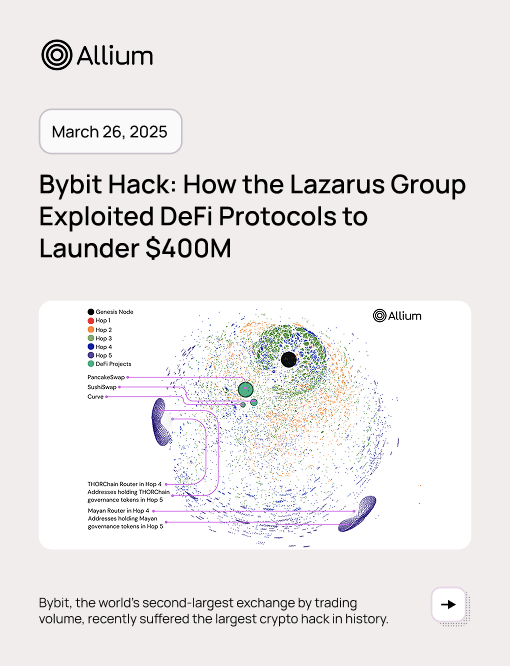
Bybit Hack: How the Lazarus Group Exploited DeFi Protocols to Launder $400M
Game Theoretic Liquidity Provisioning in Concentrated Liquidity Market Makers

Algorithmic Techniques for Utility Improvement Across the Blockchain Stack
Finance is moving onchain. Allium is the system of record it runs on.