On-Chain Analysis of Smart Contract Dependency Risks on Ethereum
Blockchain [41] is a decentralized digital ledger that records transactions transparently. It enables verifiable interactions between smart contracts through transactions. Smart contracts [7] are programs encoding self-executing agreements with the terms directly written into code. Ethereum [4] is the most popular smart contract platform. It has been designed with the vision that smart contracts interact with each other as part of ever more complex and composable agreements [49].
Understanding how smart contracts depend on each other is crucial yet understudied. In traditional software ecosystems, tools like package managers, software bill of materials, and automated dependency bots are used to track and manage dependencies. However, these methods do not apply to smart contracts. The smart contract ecosystem lacks standardized dependency declarations. Contract dependencies are oftenopaque, as they are typically hardcoded or dynamically resolved at runtime through deployed addresses. This possesses several security risks. In this paper, we aim to study the width and depth of smart contract dependencies and the corresponding risks.
The most expensive long onchain is a crowded bet on SK Hynix
US-linked wallets are the biggest political crowd on Polymarket despite being geoblocked

Which Company Will Be the World's Largest by Year-End 2026?
State of Onchain Finance Q2 ’26

Meeting in the Middle
Pricing SpaceX Pre-IPO Onchain
.webp)
World Cup Prediction Markets Geography
A Four-Year Bug, a 64% Crash, and a Question Nobody Can Close
Tokenized US Funds Onchain: $14.2B and Compounding
Tokenized Equities Onchain: $3.3B and Growing
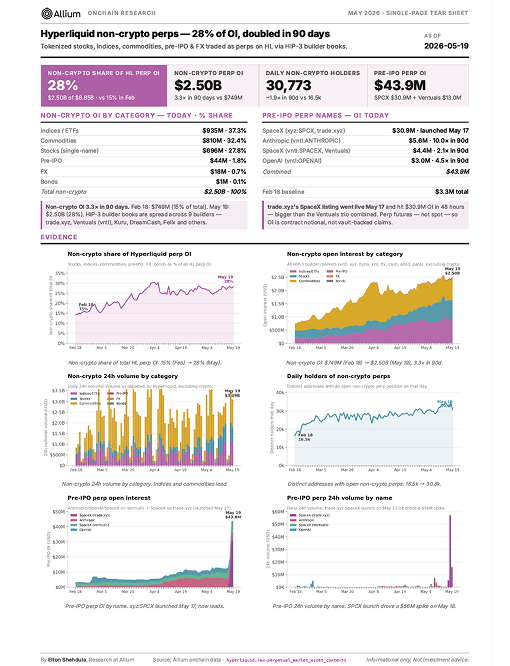
Hyperliquid non-crypto perps
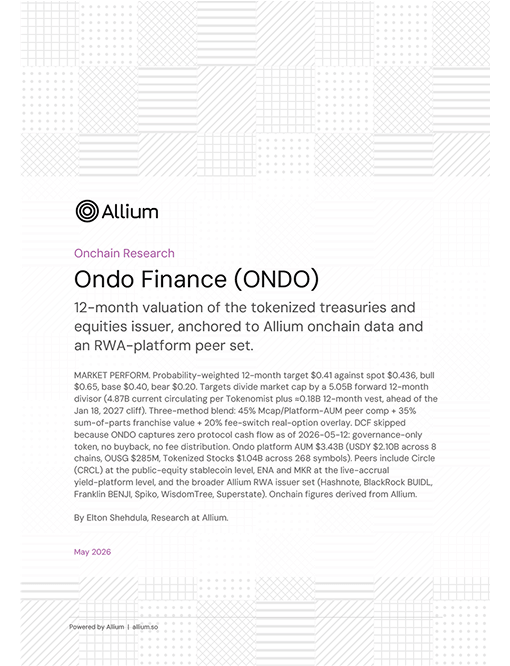
Ondo Finance (ONDO)
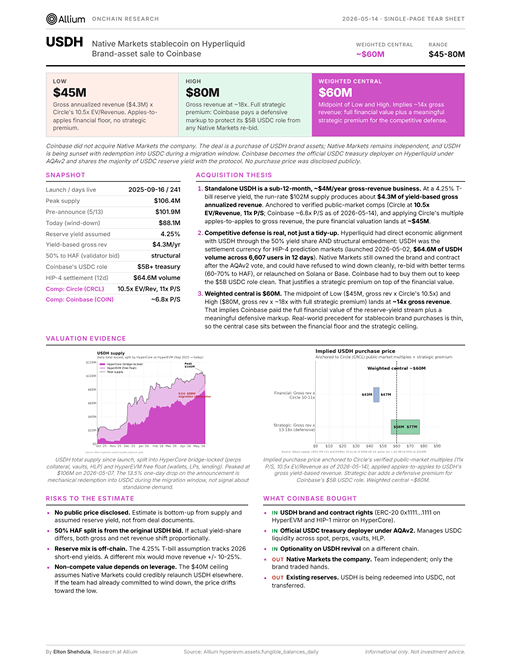
USDH: What Coinbase Actually Bought
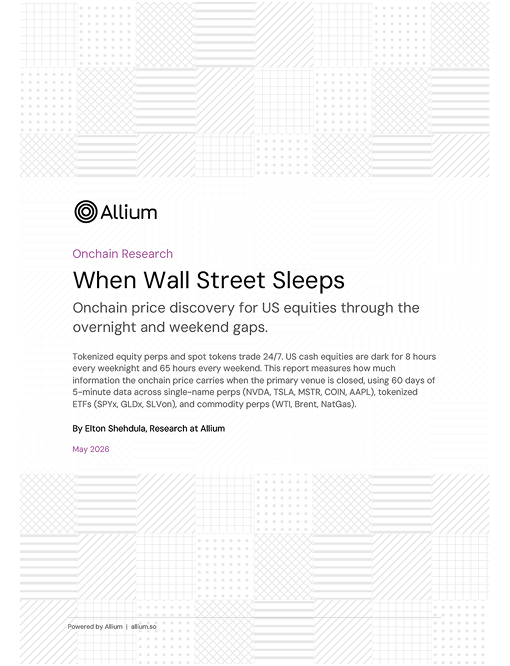
When Wall Street Sleeps
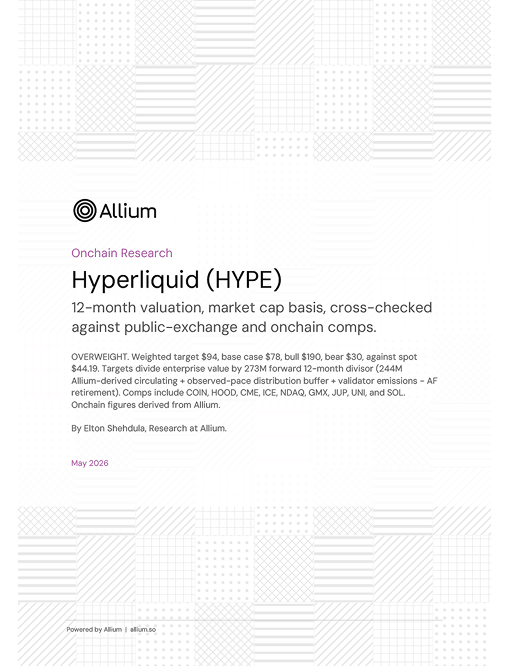
Hyperliquid (HYPE): Onchain Research
Franklin Templeton on Stellar: Onchain Analysis
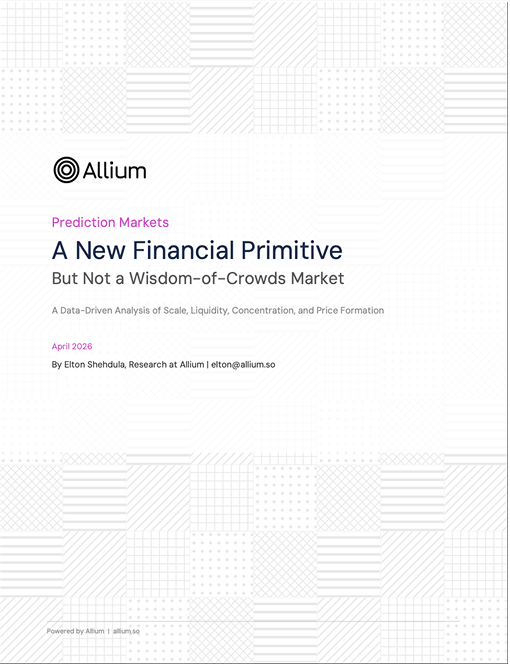
Prediction Markets: A New Financial Primitive
Stellar: Institutional Infrastructure for Global Settlement and Tokenized Assets
Tokenized Equities: Market Adoption and Trading Dynamics
Stablecoins: The emergence of a new payment rail
Onchain Execution: How Institutions Are Trading in DeFi Markets
Stablecoin Payments: The Truth Behind the Numbers

In the Shadow of Bank Runs: Lessons from the Silicon Valley Bank Failure and Its Impact on Stablecoins
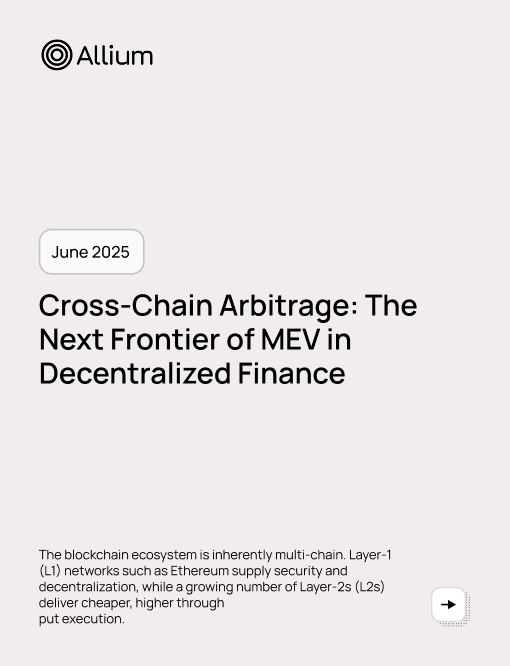
Cross-Chain Arbitrage: The Next Frontier of MEV in Decentralized Finance
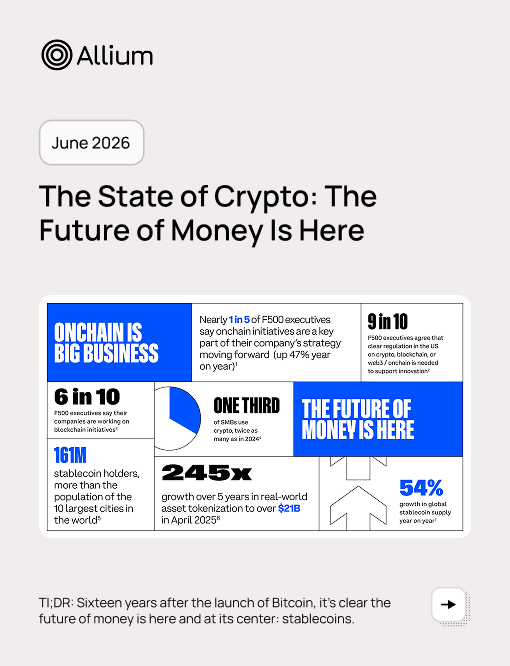
The State of Crypto: The Future of Money Is Here
Stablecoins: Five killer tests to gauge their potential
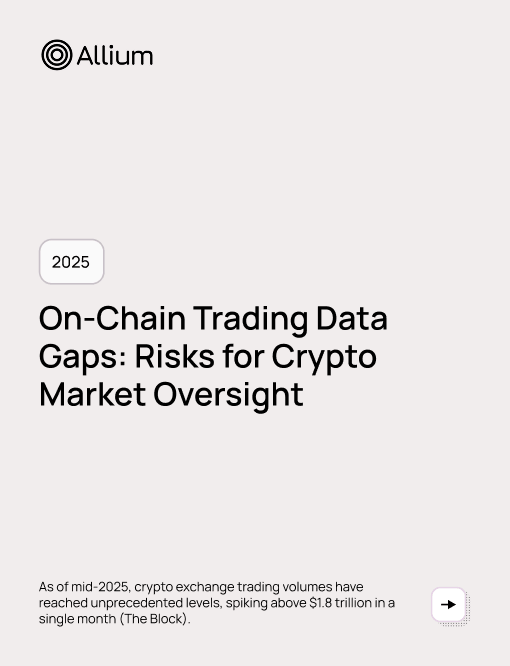
On-Chain Trading Data Gaps: Risks for Crypto Market Oversight
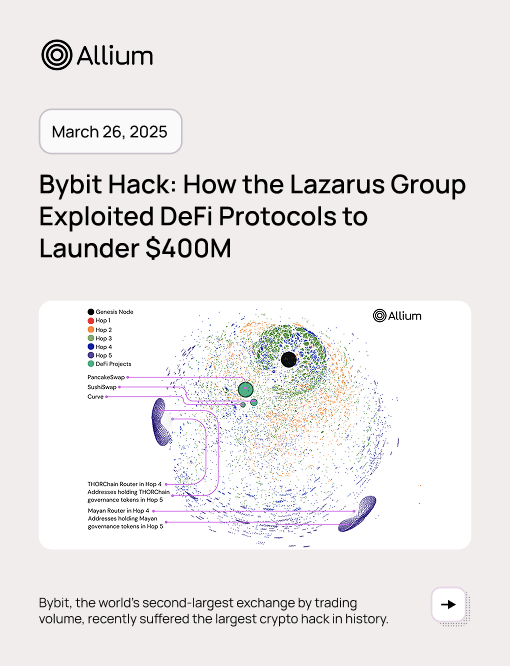
Bybit Hack: How the Lazarus Group Exploited DeFi Protocols to Launder $400M
Game Theoretic Liquidity Provisioning in Concentrated Liquidity Market Makers

Algorithmic Techniques for Utility Improvement Across the Blockchain Stack
Finance is moving onchain. Allium is the system of record it runs on.