Stablecoins: Five killer tests to gauge their potential
Imagine an economy powered by internet-based money, in which near-instant payments cost a fraction of today’s prices, in which AI agents act autonomously to shop online and invest, and in which complex treasury operations can be ‘vibe coded’ for automation. This is the brave new world powered by stablecoins, once only touted by digital evangelists but now seemingly on the brink of a breakout year. In that context, the urgent task for financial industry leaders is to gauge whether there are significant opportunities and if so, how they can add value in fast-evolving landscape.
The fintech mantra for 2025 is that “stablecoins have found product-market fit,” according toSilicon Valley venture capital firm Andreessen Horowitz.¹ Indeed, by the end of 2024, stablecoins had a market cap of more than $210 billion, amid 57% year-on-year growth and transaction volumes that hit an astonishing $26.1 trillion.² While the vast majority of volumes were related to crypto trading and decentralized finance (DeFi), we estimate that 5-10%—still an impressive $1.3 trillion—were genuine payments transactions in activities such as cross-border remittances, corporate treasury, and retail in geographies including Turkey, Nigeria, and Dubai3. These kinds of use cases represented about 10% of the total 2024 transaction count4, driven by lower value payments as transaction costs fell.
Positive sentiment around stablecoins has been matched by IPO and M&A talk. The recent standout example was Ripple’s $4 billion to $5 billion bid for Circle Internet Group (owner of the $55 billion market cap USDC stablecoin5), which was rejected by the stablecoin issuer, along with rumored listing ambitions from the likes of Circle, Kraken, Gemini, Binance, and Bitso.
The most expensive long onchain is a crowded bet on SK Hynix
US-linked wallets are the biggest political crowd on Polymarket despite being geoblocked
Which Company Will Be the World's Largest by Year-End 2026?
State of Onchain Finance Q2 ’26

Meeting in the Middle
Pricing SpaceX Pre-IPO Onchain
.webp)
World Cup Prediction Markets Geography
A Four-Year Bug, a 64% Crash, and a Question Nobody Can Close
Tokenized US Funds Onchain: $14.2B and Compounding
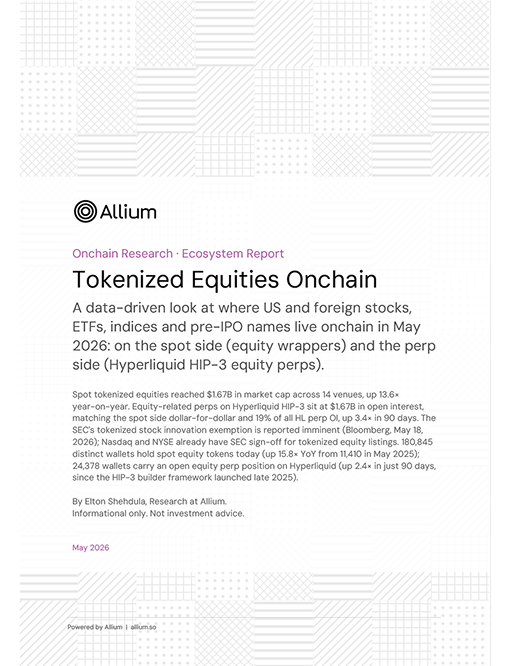
Tokenized Equities Onchain: $3.3B and Growing
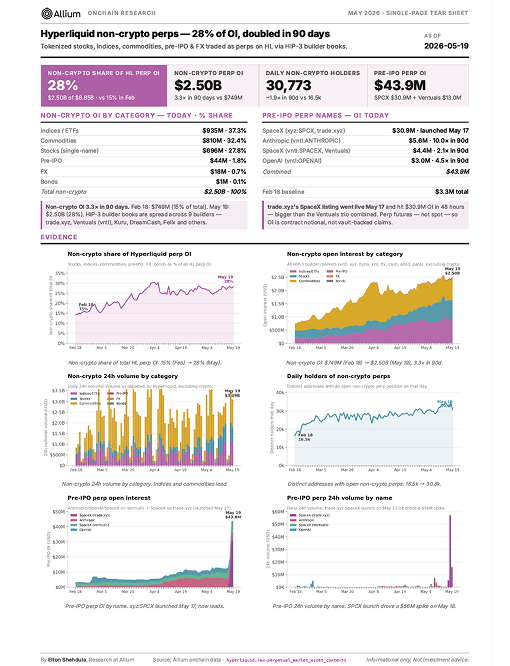
Hyperliquid non-crypto perps
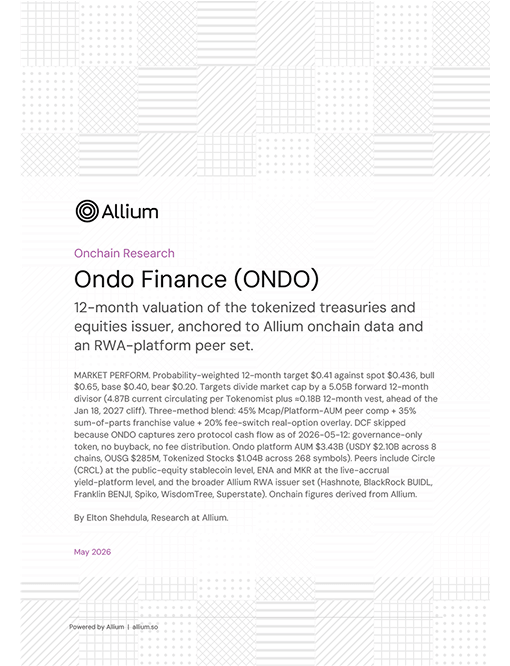
Ondo Finance (ONDO)
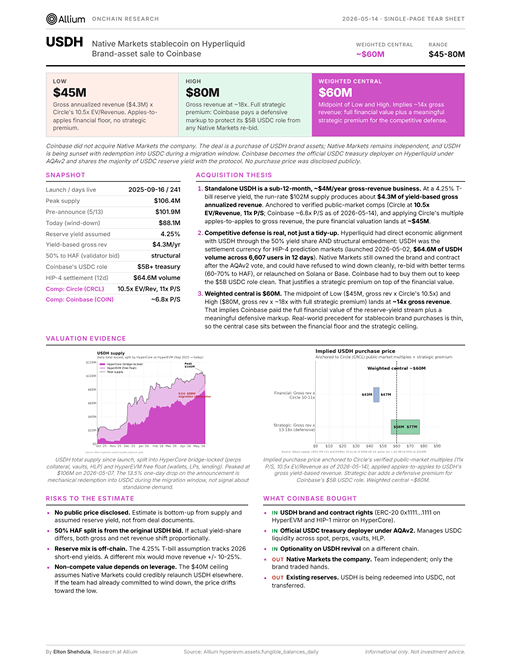
USDH: What Coinbase Actually Bought
When Wall Street Sleeps
Hyperliquid (HYPE): Onchain Research
Franklin Templeton on Stellar: Onchain Analysis
Prediction Markets: A New Financial Primitive
Stellar: Institutional Infrastructure for Global Settlement and Tokenized Assets
Tokenized Equities: Market Adoption and Trading Dynamics
Stablecoins: The emergence of a new payment rail
Onchain Execution: How Institutions Are Trading in DeFi Markets
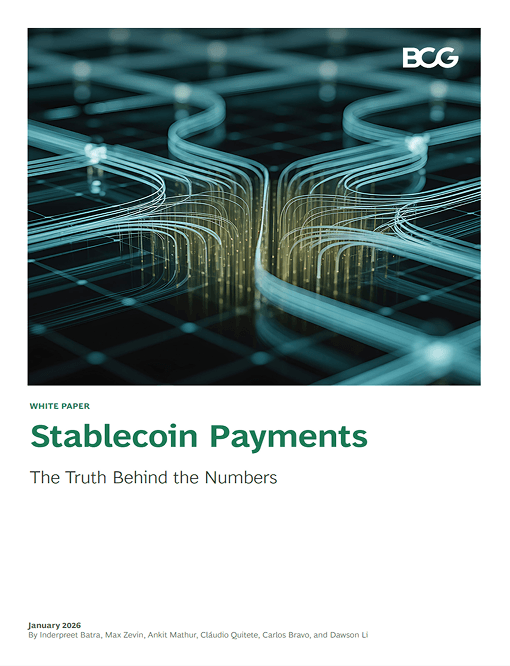
Stablecoin Payments: The Truth Behind the Numbers

In the Shadow of Bank Runs: Lessons from the Silicon Valley Bank Failure and Its Impact on Stablecoins
Cross-Chain Arbitrage: The Next Frontier of MEV in Decentralized Finance
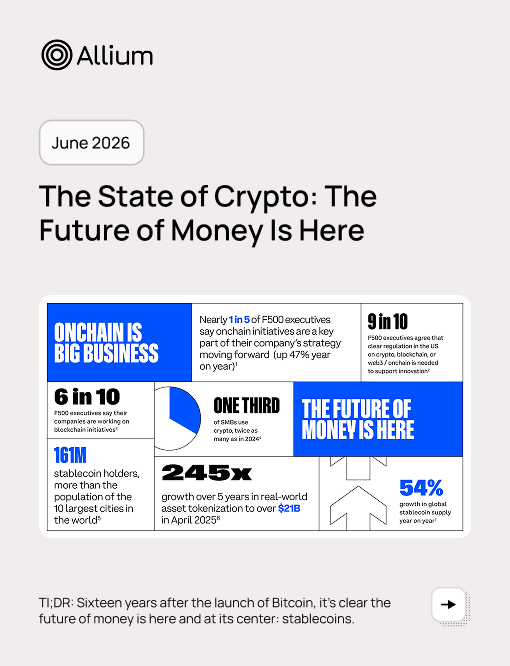
The State of Crypto: The Future of Money Is Here
On-Chain Trading Data Gaps: Risks for Crypto Market Oversight
On-Chain Analysis of Smart Contract Dependency Risks on Ethereum
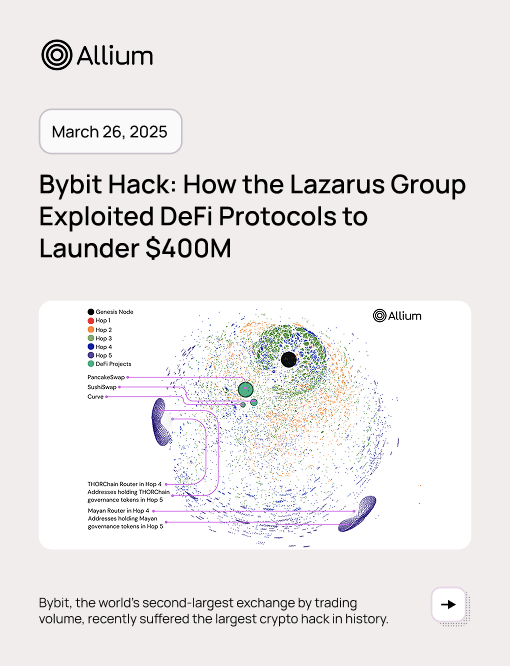
Bybit Hack: How the Lazarus Group Exploited DeFi Protocols to Launder $400M
Game Theoretic Liquidity Provisioning in Concentrated Liquidity Market Makers

Algorithmic Techniques for Utility Improvement Across the Blockchain Stack
Finance is moving onchain. Allium is the system of record it runs on.