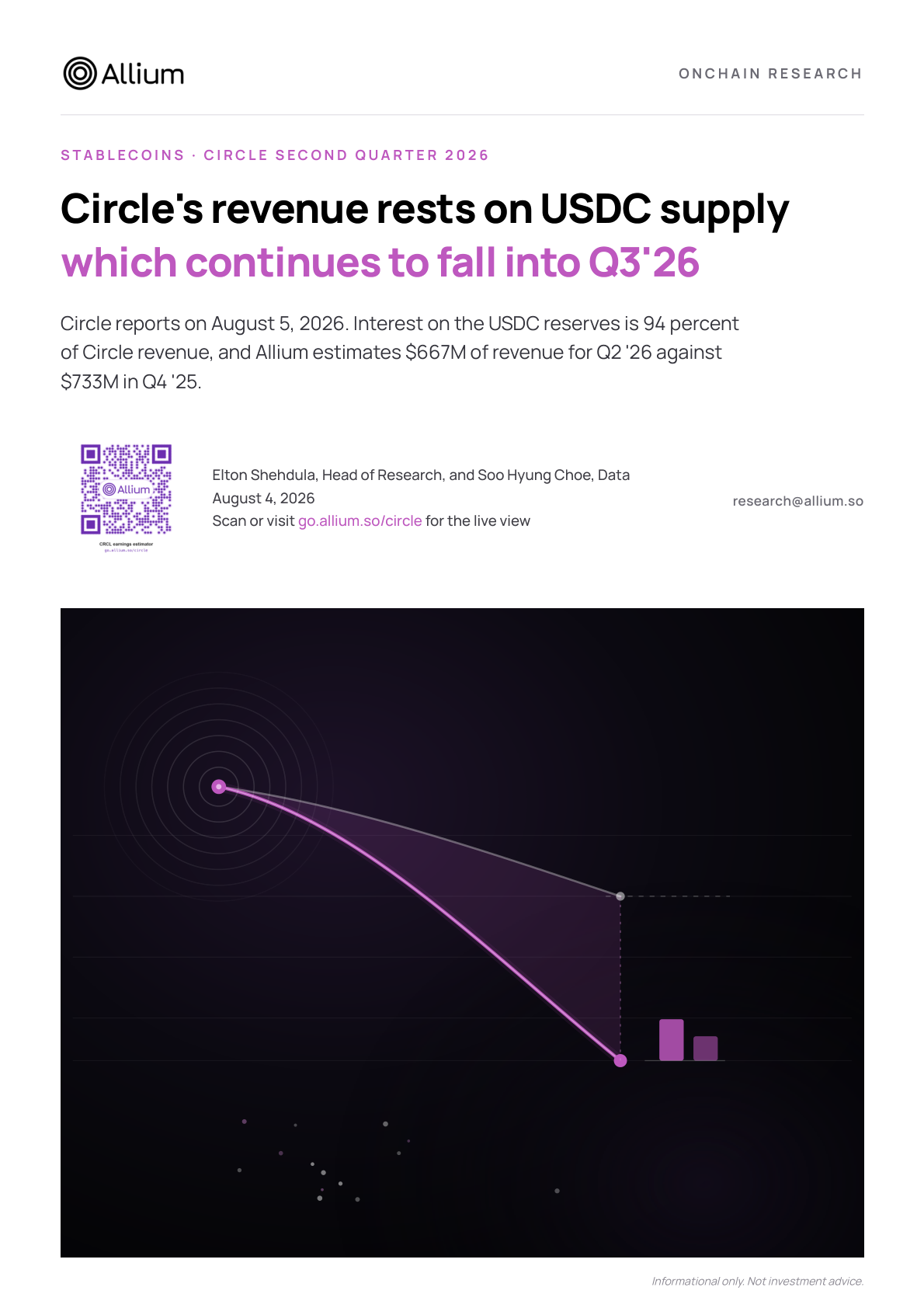
Circle's revenue rests on USDC supply which continues to fall into Q3'26
Circle reports on August 5, 2026. Interest on the USDC reserves is 94 percent of Circle revenue, and Allium estimates $667M of revenue for Q2 '26 against $733M in Q4 '25. Actual Q2'26 reported was $668M.
Interest on the USDC reserves is 94 percent of Circle's revenue, and the balance it accrues on is published every day. That balance peaked at $79.2B on 17 March 2026 and stands at $71.8B, so Allium estimates $667M of reserve interest for Q2 '26 against $733M in Q4 '25, Circle's best quarter. The September quarter is already tracking near $640M with 35 of its 92 days measured, which makes the next four quarters a question about supply rather than about the print. By Elton Shehdula, Head of Research @Allium and Soo Hyung Choe, Data @Allium
Circle's revenue is almost entirely interest on the dollars backing USDC. Every USDC in circulation is matched by a dollar held in short-term US government debt, Circle keeps most of what that dollar earns, and that line is 94 percent of what the company makes. Both inputs are public: how much USDC exists is published every day, and the Circle Reserve Fund publishes the rate the reserves earn. Multiplying them has landed within 0.6 percent of every quarter Circle has filed since the first quarter of 2024.
That balance is now shrinking. USDC peaked at $79.2B on 17 March 2026 and stands at $71.8B, down 9.4 percent. Supply fell $3.6B inside the June quarter and another $1.3B since 30 June, which puts the September quarter on course for $638M to $642M of reserve interest against $667M in June. Thirty-five of that quarter's 92 days are already measured, so the figure reads closer to a measurement than a forecast.
The decline is not evenly shared. Stablecoin supply fell $4.4B between 31 March and 30 June, USDC accounted for $3.6B of that fall, and USDT grew $0.4B over the same window. USDC's share of all stablecoins slipped to 23.9 percent from 24.8. Trading is the largest use of both tokens, at 49.6 percent of USDC end-user volume against 48.2 percent of USDT, and what differs is scale: USDT moved $1,308B in the first half of 2026 against USDC's $159B. Most stablecoin payment activity runs on Tron, where USDT holds $89.5B against USDC's $28M. USDC has payment users, but too few to hold the balance up when trading slows.
One input is moving in Circle's favour. Kalshi prices a September rate cut at 3 percent against 50 percent for a rise, and Polymarket US puts a rise somewhere in 2026 at 68 percent. A rise of 0.25 percent adds about $44M a quarter at the current balance. The catch is that higher rates also cool the risk appetite that brings USDC onto exchanges, so the move that lifts the yield can shrink the balance.
Circle's own tokenized US Treasury fund pays it less per dollar than USDC does. USYC has grown to $3.0B, about a fifth of a $15B market that has grown 7.6 times in two years. Circle keeps about 2 percent on a USDC dollar before distribution to partners other than Coinbase, against about 0.37 percent on a USYC dollar, so every dollar that moves across pays it four to five times less. Institutions hold nearly all of these funds today. As DeFi protocols accept them as collateral and retail platforms list them, they could become a serious alternative for the non-payment uses that make up most stablecoin volume.
Informational only. Not investment advice.
Polymarket and Kalshi now predict future GPU rental prices
Onchain: The New Alternative Alpha
A live market priced CXMT's 472% IPO pop before Shanghai opened

Gain exposure to Anthropic and OpenAI before the IPO

Binance's outflows shifted further to self-custody into the MiCA deadline
The most expensive long onchain is a crowded bet on SK Hynix
US-linked wallets are the biggest political crowd on Polymarket despite being geoblocked
Which Company Will Be the World's Largest by Year-End 2026?
State of Onchain Finance Q2 ’26
Meeting in the Middle
Pricing SpaceX Pre-IPO Onchain
.webp)
World Cup Prediction Markets Geography
A Four-Year Bug, a 64% Crash, and a Question Nobody Can Close
Tokenized US Funds Onchain: $14.2B and Compounding
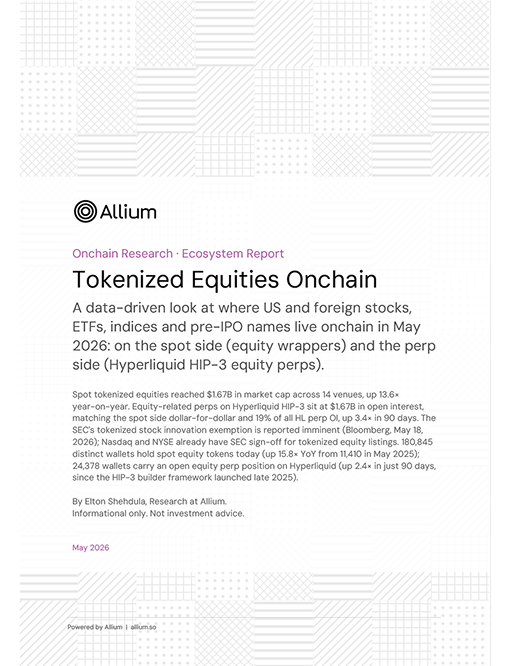
Tokenized Equities Onchain: $3.3B and Growing
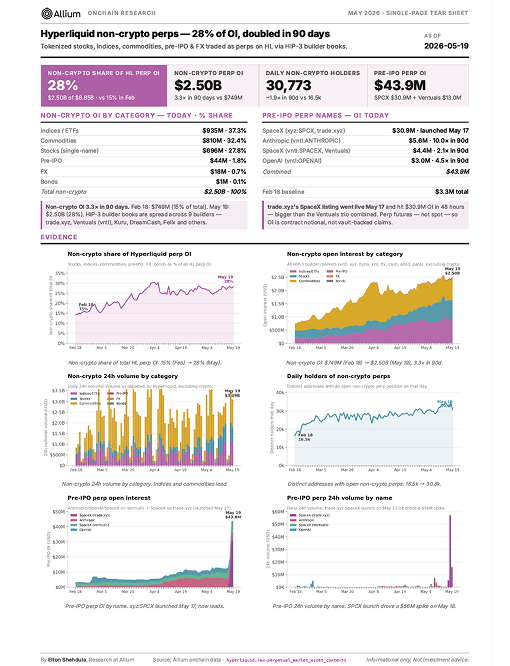
Hyperliquid non-crypto perps
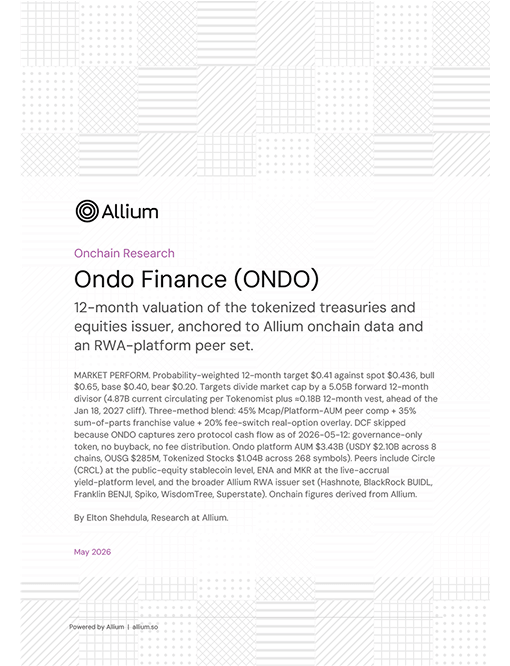
Ondo Finance (ONDO)
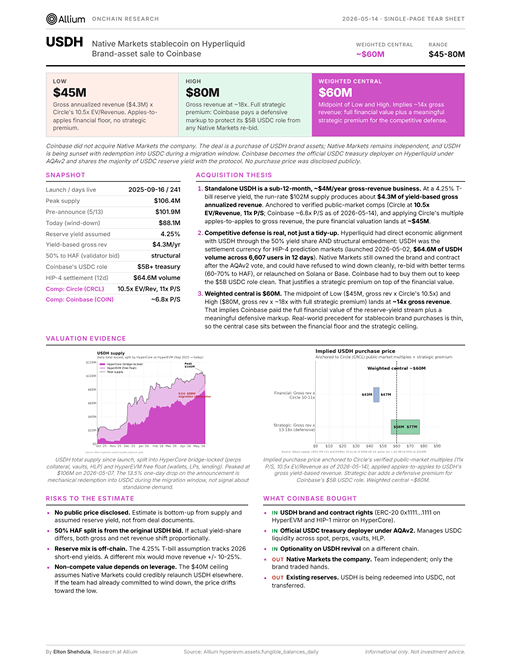
USDH: What Coinbase Actually Bought
When Wall Street Sleeps
Hyperliquid (HYPE): Onchain Research
Franklin Templeton on Stellar: Onchain Analysis
Prediction Markets: A New Financial Primitive
Stellar: Institutional Infrastructure for Global Settlement and Tokenized Assets
Tokenized Equities: Market Adoption and Trading Dynamics
Stablecoins: The emergence of a new payment rail
Onchain Execution: How Institutions Are Trading in DeFi Markets
Stablecoin Payments: The Truth Behind the Numbers

In the Shadow of Bank Runs: Lessons from the Silicon Valley Bank Failure and Its Impact on Stablecoins
Cross-Chain Arbitrage: The Next Frontier of MEV in Decentralized Finance
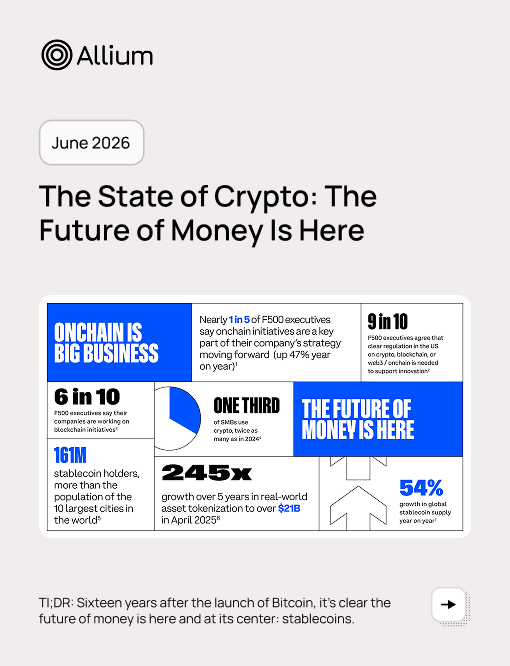
The State of Crypto: The Future of Money Is Here
Stablecoins: Five killer tests to gauge their potential
On-Chain Trading Data Gaps: Risks for Crypto Market Oversight
On-Chain Analysis of Smart Contract Dependency Risks on Ethereum
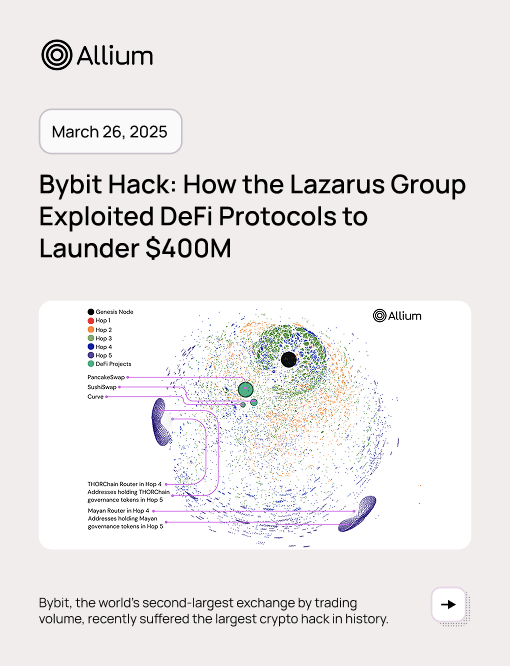
Bybit Hack: How the Lazarus Group Exploited DeFi Protocols to Launder $400M
Game Theoretic Liquidity Provisioning in Concentrated Liquidity Market Makers

Algorithmic Techniques for Utility Improvement Across the Blockchain Stack
Finance is moving onchain. Allium is the system of record it runs on.